

Buying car insurance for the first time can feel confusing. Between deductibles, premiums, liability limits, and policy options, many drivers purchase coverage without fully understanding what they are paying for.
Yet car insurance is one of the most important financial tools for drivers in the United States. A single accident can lead to repair bills, medical expenses, lawsuits, and long-term financial stress. Insurance exists to help protect you from those unexpected costs.
So, how does car insurance work in the USA?
In simple terms, you pay a monthly or yearly premium to an insurance company. In exchange, the company agrees to help pay for covered damages, injuries, or losses after an accident or other insured event.
But there is much more happening behind the scenes.
This guide explains how car insurance works, what different types of coverage actually do, how claims work, how deductibles affect your costs, and how to choose the right protection for your situation.
Whether you are a beginner driver, a first-time policyholder, or simply trying to understand your coverage better, this guide will help you make smarter insurance decisions.
Table of Contents
- What Is Car Insurance?
- Why Car Insurance Exists
- How Car Insurance Actually Works
- The Core Idea: You Pay a Little So You Don’t Lose a Lot
- Types of Car Insurance Coverage
- Liability vs Full Coverage Insurance
- How Insurance Premiums Are Calculated
- How Deductibles Work in Car Insurance
- How the Car Insurance Claims Process Works
- Minimum Car Insurance Requirements in the USA
- No-Fault vs At-Fault States
- What Car Insurance Actually Covers
- What Car Insurance Does NOT Cover
- How to Choose the Right Car Insurance Policy
- How to Save Money on Car Insurance
- Common Car Insurance Mistakes
- Frequently Asked Questions
- Key Takeaways
- Final Thoughts
What Is Car Insurance?
Car insurance is a legal and financial agreement between you and an insurance company.
You pay the insurer a premium, and in return, the insurer agrees to help cover certain financial losses related to your vehicle.
Depending on your policy, car insurance may help pay for the following:
- Vehicle repairs
- Medical expenses
- Property damage
- Lawsuits
- Theft
- Storm damage
- Rental cars
- Injuries to other drivers
Every policy contains:
- Coverage types
- Coverage limits
- Deductibles
- Exclusions
- Policy conditions
Understanding these parts is essential because not all policies protect you the same way.

Why Car Insurance Exists
Driving creates financial risk.
Even careful drivers can
- Cause accidents
- Be hit by uninsured drivers
- Experience theft
- Face lawsuits
- Suffer weather damage
- Injure passengers
Without insurance, these expenses would come directly out of your pocket.
A serious accident can easily cost tens or even hundreds of thousands of dollars.
Car insurance spreads that risk across millions of policyholders.
Instead of one person paying a massive unexpected bill, everyone contributes smaller, predictable payments through premiums.
This system helps create financial stability for both individuals and society.
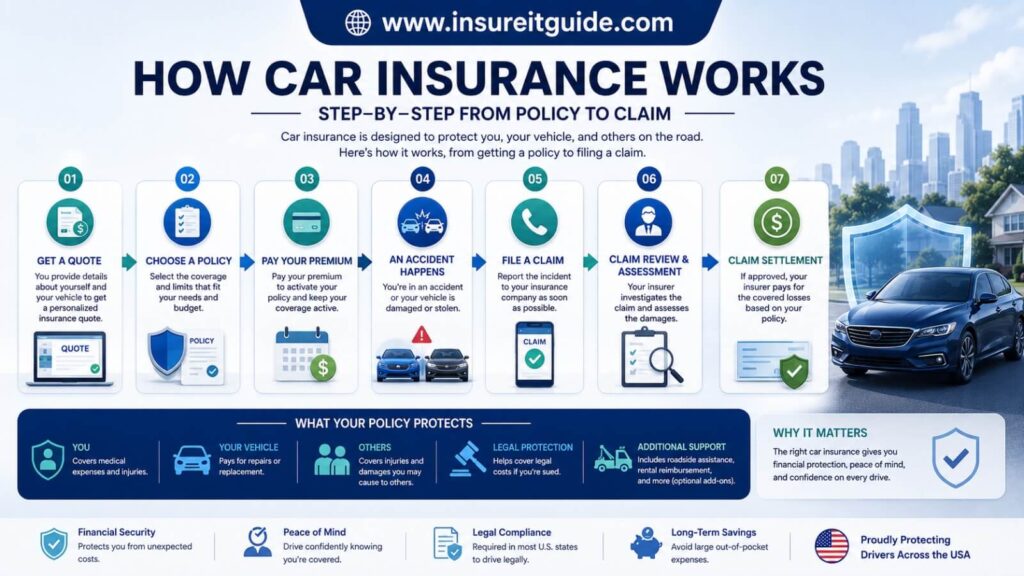
How Car Insurance Actually Works
At its core, car insurance follows a simple structure:
Step 1: You Buy a Policy
You choose:
- Coverage types
- Coverage limits
- Deductibles
- Optional protections
The insurance company then calculates your premium based on your risk profile.
Step 2: You Pay Premiums
You pay:
- Monthly
- Semi-annually
- Annually
As long as payments continue, your policy remains active.
Step 3: A Covered Event Happens
Examples include:
- Car accidents
- Theft
- Hail damage
- Medical injuries
- Vandalism
Step 4: You File a Claim
You notify your insurance company.
The insurer investigates the situation.
Step 5: The Insurance Company Pays Covered Costs
Depending on the policy:
- Repairs may be paid
- Medical bills may be covered
- Legal costs may be handled
- Settlement payments may be issued
You usually pay your deductible first, if applicable.
The Core Idea: You Pay a Little So You Don’t Lose a Lot
This is the foundation of insurance.
Most people never experience a catastrophic accident. But if one occurs, the financial damage can be devastating.
For example:
| Situation | Potential Cost |
| Minor accident | $3,000–$8,000 |
| Serious collision | $20,000+ |
| Medical injuries | $50,000+ |
| Lawsuit | Hundreds of thousands |
Instead of risking these large losses alone, insurance helps distribute the financial burden.
This is why car insurance matters even if you are a safe driver.
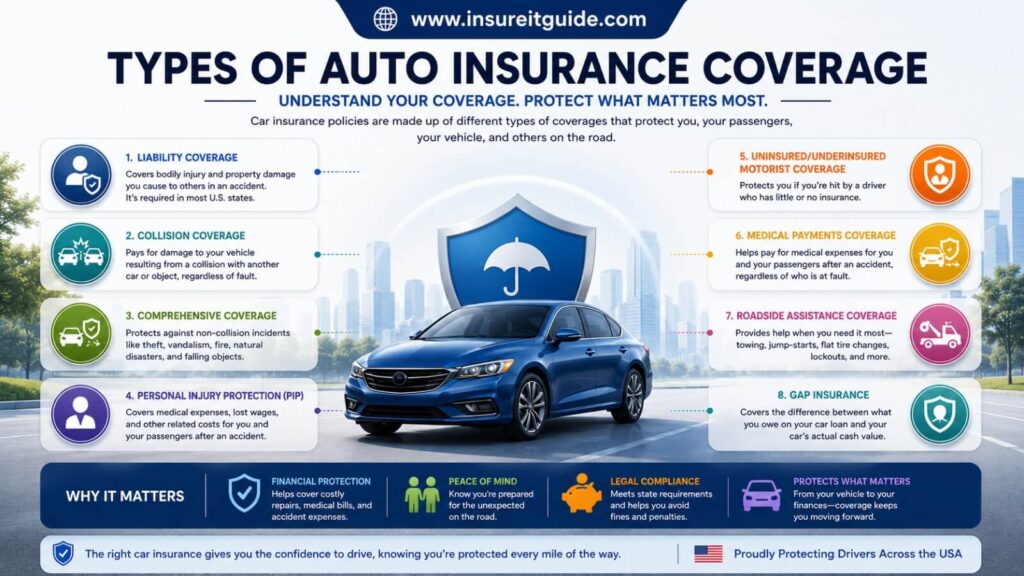
Types of Car Insurance Coverage
Understanding the main coverage types is essential.
Liability Insurance
Liability insurance helps pay for damage or injuries you cause to other people.
It typically includes:
- Bodily Injury Liability
- Property Damage Liability
This is legally required in most states.
Collision Coverage
Collision coverage helps pay to repair your own vehicle after an accident.
It applies whether
- You hit another vehicle
- You hit an object
- Your vehicle rolls over
Comprehensive Coverage
Comprehensive insurance covers non-collision events like the following:
- Theft
- Fire
- Hail
- Floods
- Falling objects
- Vandalism
Uninsured/Underinsured Motorist Coverage
This protects you if another driver lacks enough insurance.
Personal Injury Protection (PIP)
PIP helps pay:
- Medical expenses
- Lost wages
- Rehabilitation costs
It is required in some no-fault states.
Medical Payments Coverage (MedPay)
MedPay helps cover medical bills after accidents.
Gap Insurance
Gap insurance covers the difference between the following:
- Your vehicle loan balance
- Your car’s actual cash value
Rental Reimbursement Coverage
This helps pay for temporary transportation while your vehicle is being repaired.
Liability vs Full Coverage Insurance
Many drivers misunderstand the term “full coverage.”
Liability Insurance
Covers:
- Damage you cause to others
- Injuries to others
Does NOT cover:
- Your vehicle repairs
- Theft
- Weather damage
Full Coverage Insurance
Usually includes:
- Liability
- Collision
- Comprehensive
Sometimes additional protections are added as well.
Full coverage generally offers stronger financial protection but costs more.
How Insurance Premiums Are Calculated
Insurance companies calculate premiums based on risk.
Common rating factors include:
| Factor | Why It Matters |
| Driving history | Accidents increase risk |
| Age | Younger drivers are riskier |
| Vehicle type | Repair costs vary |
| ZIP code | Theft and accident rates differ |
| Credit score | Used in many states |
| Mileage | More driving increases risk |
| Claims history | Frequent claims raise costs |
The higher the perceived risk, the higher the premium.

How Deductibles Works in Car Insurance
A deductible is the amount you pay before insurance helps cover a claim.
Example:
- Repair cost: $4,000
- Deductible: $500
- Insurance pays: $3,500
Higher deductibles usually:
- Lower premiums
- Increase out-of-pocket risk
Lower deductibles usually:
- Raise premiums
- Reduce immediate financial burden during claims
Choosing the right deductible depends on your emergency savings and risk tolerance.
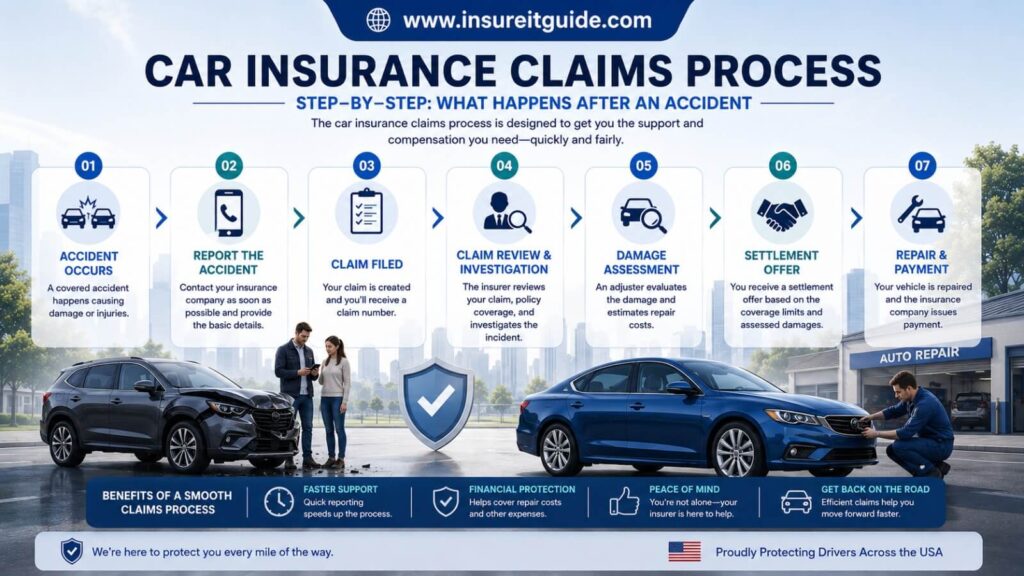
How the Car Insurance Claims Process Works
Many drivers only learn how insurance works after an accident.
Here is the typical claims process:
Step 1: Report the Accident
Contact:
- Police if necessary
- Your insurance company
Document:
- Photos
- Vehicle damage
- Driver information
- Witnesses
Step 2: Claim Investigation
The insurer reviews:
- Damage
- Fault
- Coverage details
- Repair estimates
Step 3: Damage Assessment
An adjuster evaluates repair costs.
Step 4: Payment
The insurer may:
- Pay repair shops directly
- Reimburse you
- Issue settlement payments
Minimum Car Insurance Requirements in the USA
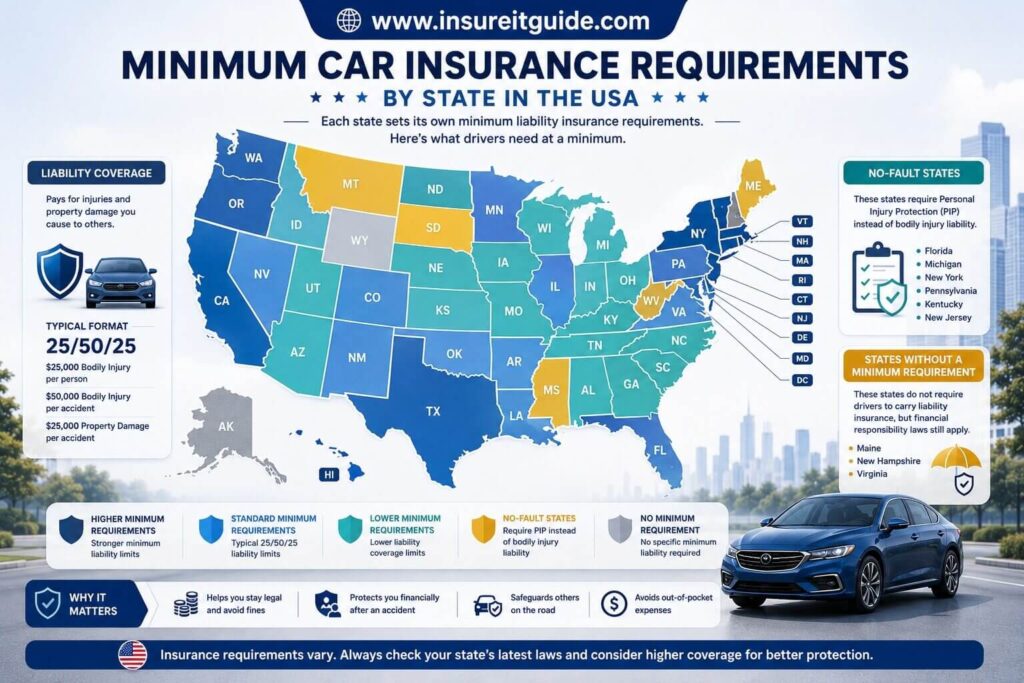
Most states legally require minimum liability insurance.
However, minimum coverage often provides limited protection.
Typical state requirements may include the following:
- Bodily injury liability
- Property damage liability
- PIP in no-fault states
Example:
25/50/25 usually means the following:
- $25,000 bodily injury per person
- $50,000 bodily injury per accident
- $25,000 property damage
Unfortunately, serious accidents can exceed these limits quickly.
No-Fault vs At-Fault States
Insurance systems vary by state.
No-Fault States
Drivers typically use their own insurance for medical expenses regardless of fault.
PIP coverage is usually required.
At-Fault States
The driver responsible for the accident generally pays damages.
Understanding your state system matters because it affects:
- Claims
- Lawsuits
- Medical coverage
- Premiums
What Car Insurance Actually Covers
Coverage depends entirely on your policy.
Typical protections may include the following:
- Vehicle repairs
- Liability claims
- Medical expenses
- Theft
- Fire
- Weather damage
- Rental vehicles
- Legal defense costs
Reading your policy carefully is important because exclusions also exist.
What Car Insurance Does NOT Cover
Many drivers assume insurance covers everything.
It does not.
Common exclusions may include:
- Intentional damage
- Racing activities
- Normal wear and tear
- Mechanical breakdowns
- Using vehicle for unauthorized business purposes
Understanding exclusions prevents surprises during claims.
How to Choose the Right Car Insurance Policy
Choosing the right policy requires balancing the following:
- Budget
- Financial protection
- Vehicle value
- Risk tolerance
Questions to Ask Yourself
- How much could I afford after an accident?
- Is my vehicle financed?
- How old is my vehicle?
- Do I drive frequently?
- Do I have emergency savings?
Smart Coverage Strategy
Many financial experts recommend:
- Higher liability limits
- Collision and comprehensive for newer cars
- Uninsured motorist coverage
- Reasonable deductibles

How to Save Money on Car Insurance
Insurance does not have to be excessively expensive.
Ways to reduce premiums include:
- Comparing quotes
- Raising deductibles
- Bundling policies
- Maintaining good credit
- Driving safely
- Taking defensive driving courses
- Reducing unnecessary coverage
However, lowering coverage too aggressively can create financial risk.
Common Car Insurance Mistakes
Many drivers make avoidable insurance mistakes.
Buying Only the Cheapest Policy
Cheap policies often provide weak protection.
Ignoring Deductibles
A low premium may come with a very high deductible.
Not Updating Coverage
Life changes require policy reviews.
Assuming Full Coverage Covers Everything
Every policy has limits and exclusions.
Not Comparing Quotes
Rates vary significantly between insurers.
Frequently Asked Questions
How does car insurance work after an accident?
After an accident, you file a claim with your insurance company. The insurer investigates the incident, reviews coverage, and helps pay covered damages after deductibles are applied.
What does car insurance actually cover?
Coverage may include liability, vehicle repairs, medical expenses, theft, weather damage, and lawsuits depending on your policy.
How do deductibles work in car insurance?
A deductible is the amount you pay before insurance contributes toward a covered claim.
Is car insurance required in the USA?
Most states legally require minimum liability insurance for drivers.
What is the difference between liability and full coverage?
Liability covers damages to others, while full coverage generally includes liability, collision, and comprehensive insurance.
Why are insurance premiums different for every driver?
Premiums vary based on risk factors like driving history, location, vehicle type, age, and claims history.
Should I buy collision and comprehensive coverage?
These coverages are often recommended for newer or financed vehicles because they help protect your own car.
How can I lower my insurance premium?
You may reduce premiums by comparing quotes, raising deductibles, improving credit, and maintaining a clean driving record.
Key Takeaways
- Car insurance helps protect drivers financially after accidents and other covered events.
- Policies contain different coverage types, limits, deductibles, and exclusions.
- Liability insurance is required in most states.
- Collision and comprehensive coverage protect your own vehicle.
- Deductibles directly affect both premiums and out-of-pocket costs.
- Insurance premiums are based on risk factors.
- Understanding your policy helps prevent expensive mistakes.
- Comparing policies carefully can improve both protection and affordability.
Suggested Internal Links
| Anchor Text | Suggested Article |
| types of auto insurance coverage | Types of Auto Insurance Coverage Explained |
| collision vs comprehensive coverage | Collision vs Comprehensive Coverage |
| how deductibles work | The Deductible Explained |
| minimum car insurance requirements | Minimum Car Insurance Requirements by State |
| liability insurance explained | What Is Liability Insurance? |
Suggested External Authority References
- National Highway Traffic Safety Administration (NHTSA)
- Insurance Information Institute (III)
- Consumer Financial Protection Bureau (CFPB)
- State Department of Insurance websites
Final Thoughts
Understanding how car insurance works in the USA is one of the smartest financial decisions a driver can make.
Insurance is not just a legal requirement. It is financial protection against unpredictable situations that could otherwise create enormous personal expenses.
The best policy is not always the cheapest one.
Instead, smart drivers focus on balancing affordability with meaningful protection.
By understanding liability limits, deductibles, claims, coverage options, and policy structures, you can choose insurance with greater confidence and avoid many of the mistakes that cost drivers money every year.
As your life changes, your insurance needs may change too. Reviewing your policy regularly helps ensure your coverage continues to match your financial goals, vehicle value, and personal risk tolerance.
For more beginner-friendly insurance guides, coverage breakdowns, and expert educational resources, visit www.insureitguide.com.
