
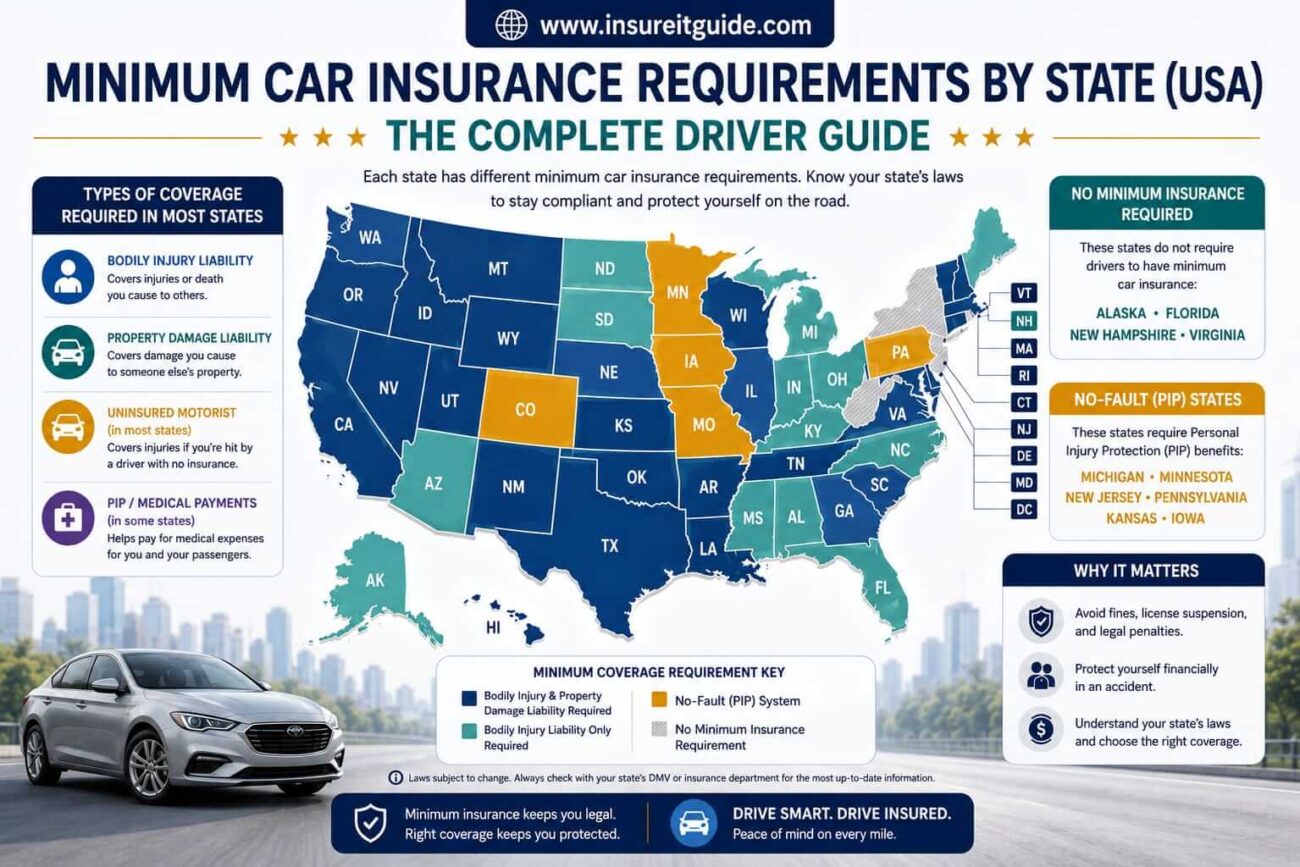
Car insurance is legally required in almost every part of the United States, but the rules are not the same everywhere. One state may require only basic liability coverage, while another may require personal injury protection, uninsured motorist coverage, or higher liability limits. For many drivers, especially first-time buyers, understanding these rules can feel confusing and overwhelming.
That confusion often leads to one of the biggest mistakes drivers make: buying the cheapest possible policy without understanding what it actually covers.
Understanding the minimum car insurance requirements by state is extremely important because your coverage determines not only whether you are driving legally but also how financially protected you are after an accident.
Whether you are:
- Buying your first car insurance policy
- Moving to another state
- Comparing coverage options
- Trying to reduce your insurance costs
- Purchasing a new vehicle
- Or reviewing your current protection
This guide will help you understand how minimum auto insurance coverage by state works and what drivers should know before choosing a policy.
In this comprehensive article, you will learn:
- What minimum car insurance requirements actually mean
- Why insurance laws differ by state
- How liability limits work
- Which states use no-fault insurance systems
- Whether minimum coverage is truly enough
- How to avoid expensive insurance mistakes
- Ways to save money while staying protected
- What happens if you drive uninsured?
By the end of this guide, you will have a much clearer understanding of required car insurance coverage in the USA and how to choose coverage that protects both your finances and your future.
Table of Contents
- What Are Minimum Car Insurance Requirements?
- Why Car Insurance Laws Differ by State
- Understanding Liability Insurance Limits
- Types of Mandatory Auto Insurance Coverage
- Minimum Car Insurance Requirements by State
- No-Fault Insurance States Explained
- States With the Lowest Insurance Requirements
- What Happens If You Drive Without Insurance?
- Is State Minimum Coverage Enough?
- Full Coverage vs Minimum Coverage
- How Much Car Insurance Do You Really Need?
- Ways to Save Money on Car Insurance
- Common Insurance Mistakes Drivers Make
- Frequently Asked Questions
- Key Takeaways
- Final Thoughts
What Are Minimum Car Insurance Requirements?
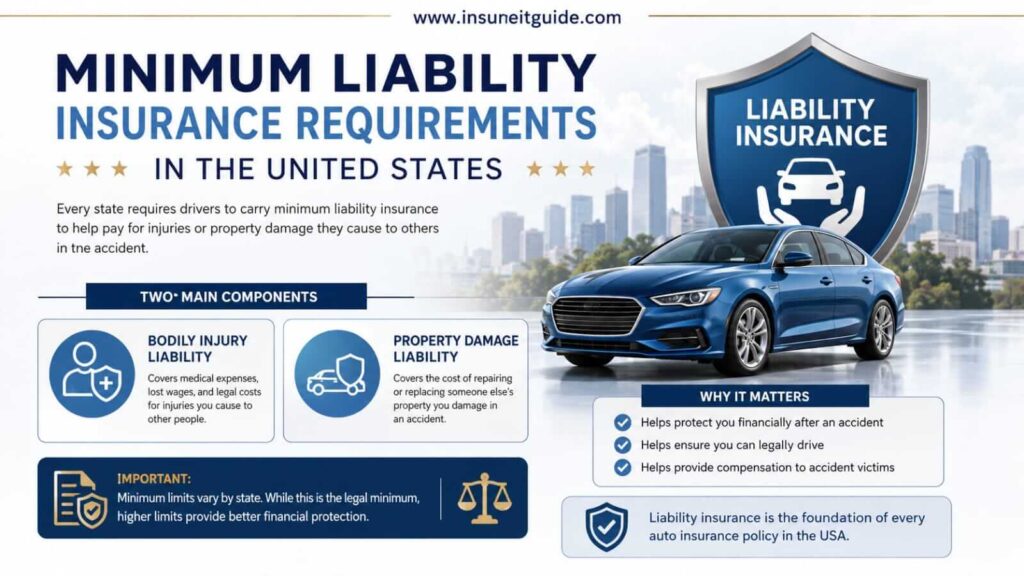
Minimum car insurance requirements are the lowest amounts of insurance drivers must legally carry before operating a vehicle on public roads.
Most states require liability insurance. Liability insurance helps pay for injuries or property damage you cause to other people during an accident.
These laws exist because car accidents can create serious financial losses. Without insurance requirements, accident victims could struggle to recover repair costs, medical bills, or lost wages.
In most states, minimum liability coverage includes:
- Bodily injury liability
- Property damage liability
Some states also require additional protection, such as the following:
- Personal Injury Protection (PIP)
- Medical Payments Coverage (MedPay)
- Uninsured motorist coverage
- Underinsured motorist coverage
Why States Require Insurance
Every year, millions of traffic accidents occur across the United States. Even relatively minor accidents can involve:
- Expensive vehicle repairs
- Emergency medical treatment
- Hospital bills
- Lost wages
- Legal claims
- Long-term rehabilitation costs
State governments require insurance because they want drivers to have at least some ability to pay for damages they may cause.
Without these laws, many people injured in accidents would have little financial protection.
The Difference Between Legal Minimums and Financial Protection
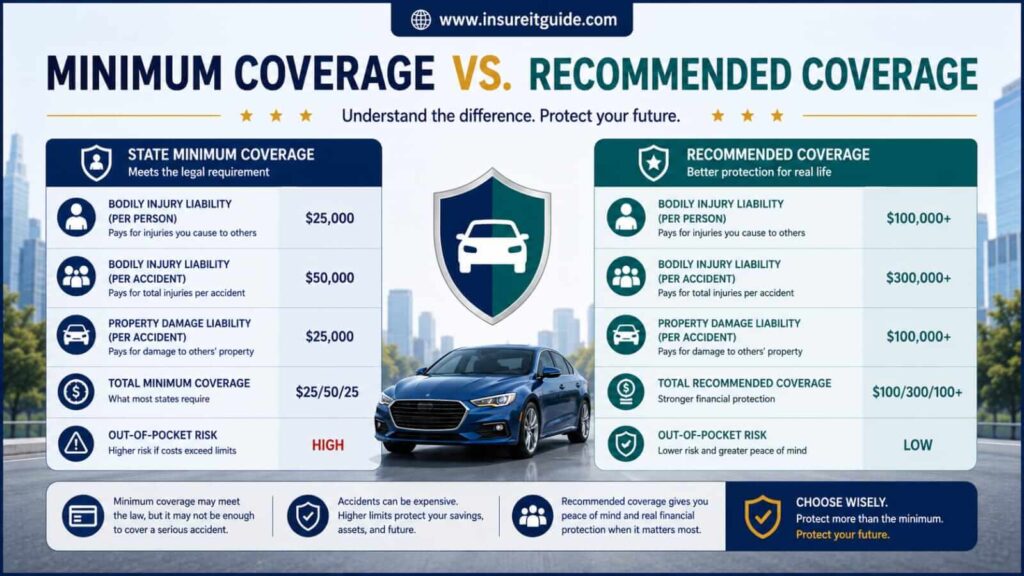
One of the biggest misunderstandings among drivers is believing that “minimum required” automatically means “good enough.”
In reality, state minimum limits are often designed only to satisfy legal requirements. They may not fully protect drivers after serious accidents.
For example, a driver carrying only basic liability coverage could still become personally responsible for thousands of dollars if damages exceed policy limits.
That is why many financial experts recommend coverage levels higher than the state minimum.
Why Car Insurance Laws Differ by State
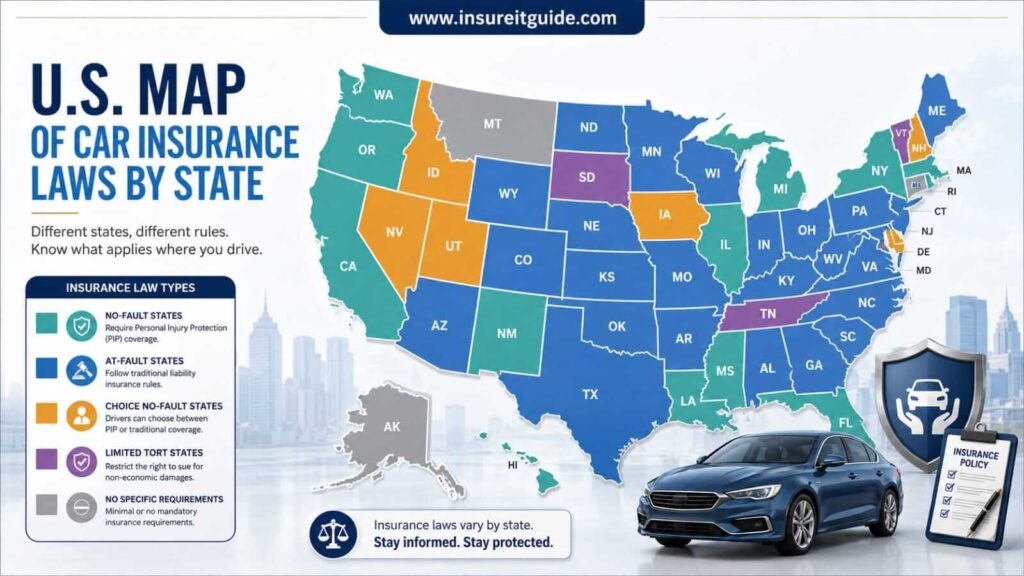
Car insurance laws vary because insurance is regulated primarily at the state level rather than the federal level.
Each state decides:
- Required liability limits
- Mandatory coverage types
- Penalties for uninsured driving
- Financial responsibility laws
- Insurance verification systems
Several factors influence these laws.
Population Density
States with larger populations and heavier traffic often experience more accidents.
For example:
- California
- Texas
- Florida
- New York
All experience extremely high traffic volume.
More traffic usually means the following:
- Higher accident frequency
- Larger claim costs
- Greater lawsuit exposure
Medical Costs
Healthcare expenses vary significantly across states. Areas with expensive medical treatment often require stronger insurance protections.
Medical inflation has also increased claim costs nationwide.
Weather Risks
Weather conditions affect insurance risks heavily.
For example:
- Florida faces hurricanes and flooding.
- Colorado experiences hail damage
- Northern states deal with snow and ice accidents.
- California faces wildfire-related risks.
These conditions influence insurance pricing and coverage requirements.
Legal Systems and Lawsuits
Some states experience higher lawsuit activity after accidents. This impacts how insurance systems are designed.
States with more litigation often see higher premiums because insurers face larger financial risks.
No-Fault Insurance Systems
Some states use no-fault insurance systems. These systems require drivers to use their own insurance for medical expenses regardless of fault.
No-fault systems often require personal injury protection coverage.
Understanding Liability Insurance Limits
One of the most confusing parts of car insurance for beginners is understanding liability limits.
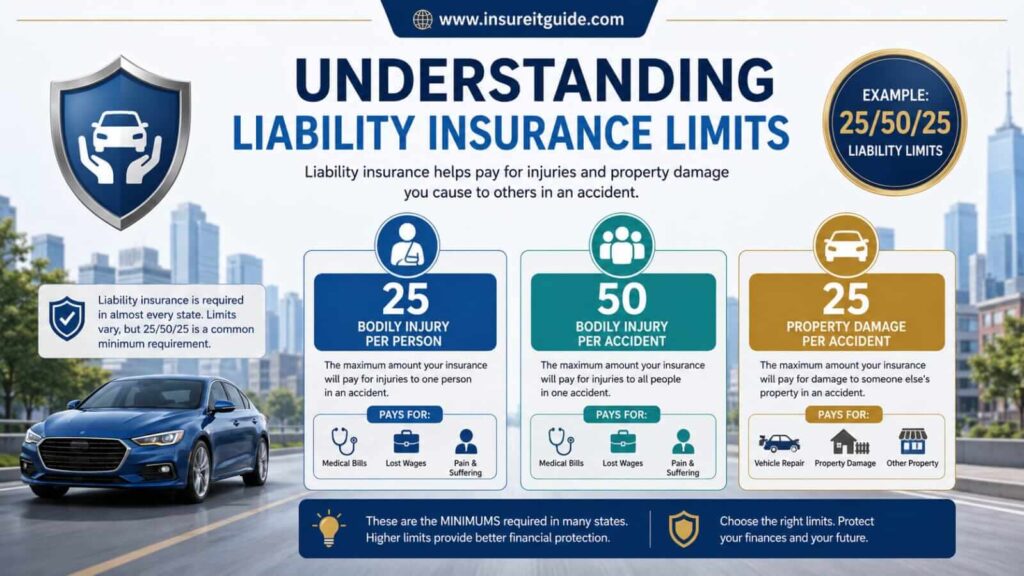
Insurance companies commonly display liability coverage using three numbers.
Example:
25/50/25
This means:
- $25,000 bodily injury coverage per person
- $50,000 bodily injury coverage per accident
- $25,000 property damage coverage
Bodily Injury Liability
Bodily injury liability helps pay for injuries you cause to other people.
This may include:
- Emergency treatment
- Hospital bills
- Surgery costs
- Rehabilitation expenses
- Lost wages
- Legal settlements
Example: if you cause an accident that injures another driver, your bodily injury liability coverage may help pay for their medical expenses.
Property Damage Liability
Property damage liability helps cover damage you cause to another person’s property.
Examples include:
- Vehicle repairs
- Building damage
- Fence repairs
- Utility pole damage
- Public property repairs
Modern vehicles are increasingly expensive to repair because they contain the following:
- Advanced sensors
- Cameras
- Driver-assistance systems
- Expensive electronics
This means even relatively minor accidents can create surprisingly high repair bills.
Why Low Liability Limits Can Be Dangerous
Many drivers choose minimum coverage simply because it is cheaper.
However, low liability limits can create serious financial risk.
Imagine causing an accident involving:
- Multiple vehicles
- Expensive SUVs
- Serious medical injuries
If damages exceed your policy limits, you could personally owe the remaining balance.
This is one reason many insurance professionals recommend carrying higher liability limits than state minimum requirements.
Types of Mandatory Auto Insurance Coverage
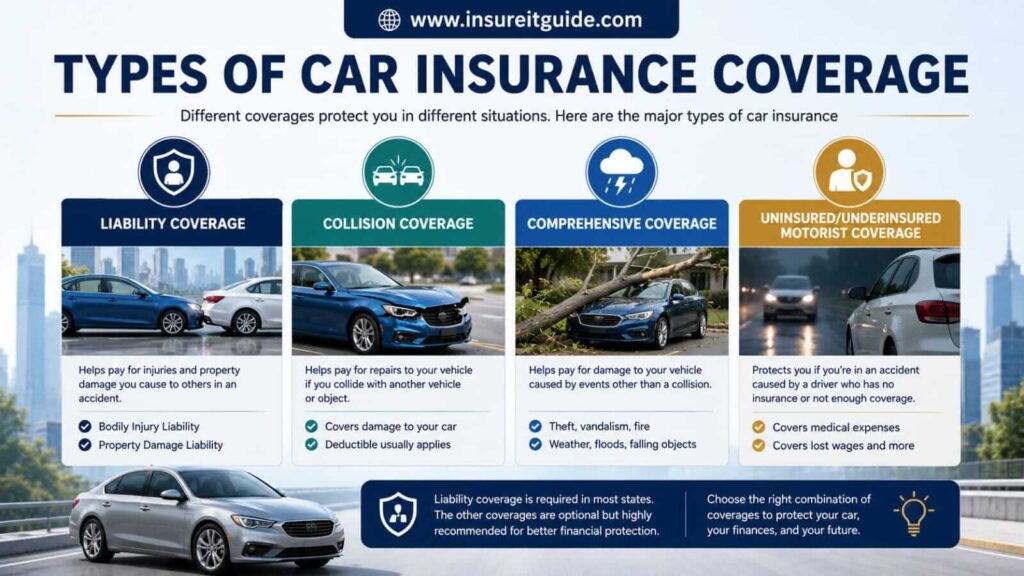
Different states require different types of mandatory auto insurance coverage.
Understanding these coverages helps drivers make smarter insurance decisions.
Liability Insurance
Liability insurance is required in almost every state.
It protects other people when you cause an accident.
However, liability insurance usually does not cover:
- Your own vehicle repairs
- Your own medical expenses
Personal Injury Protection (PIP)
PIP is commonly required in no-fault states.
PIP may help pay for:
- Medical bills
- Lost wages
- Rehabilitation costs
- Funeral expenses
One important feature of PIP is that it applies regardless of who caused the accident.
Medical Payments Coverage (MedPay)
Medical payments coverage is similar to PIP but generally more limited.
It usually focuses primarily on medical expenses after accidents.
Uninsured Motorist Coverage
This coverage protects you if another driver:
- Has no insurance
- Does not carry enough coverage
Uninsured motorist coverage is extremely important because millions of drivers remain uninsured nationwide.
Collision Coverage
Collision insurance helps repair your own vehicle after accidents.
Although not usually required by law, lenders often require collision coverage for financed vehicles.
Comprehensive Coverage
Comprehensive insurance covers non-collision damage.
Examples include:
- Theft
- Fire
- Flooding
- Hail damage
- Falling objects
- Vandalism
- Animal collisions
Comprehensive coverage provides broader protection beyond normal traffic accidents.
Minimum Car Insurance Requirements by State
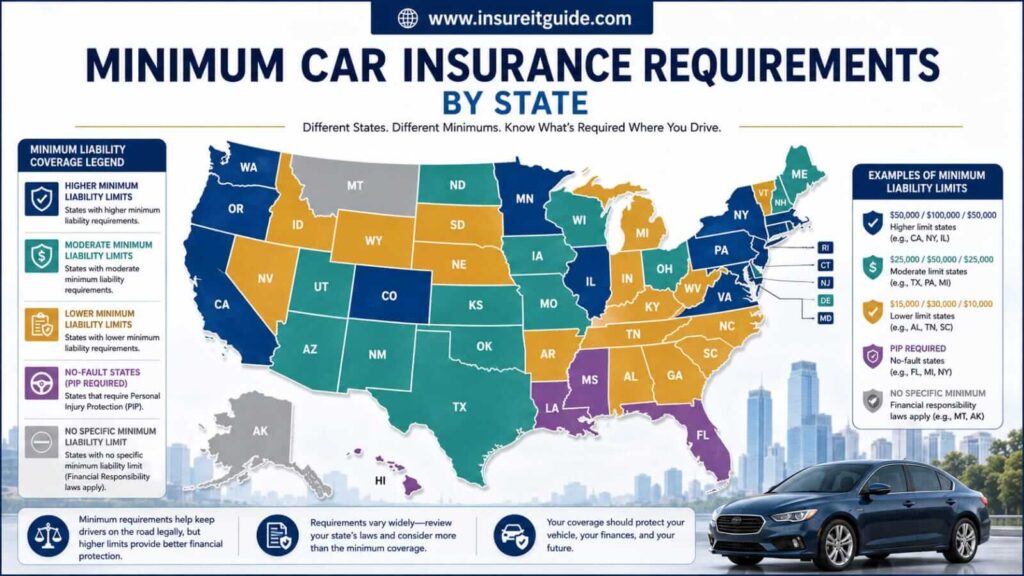
Every state has different minimum liability requirements.
Below is a simplified overview of several major states.
| State | Minimum Liability Limits | Additional Requirements |
| California | 15/30/5 | None |
| Texas | 30/60/25 | None |
| Florida | 10/20/10 | PIP required |
| New York | 25/50/10 | PIP required |
| Michigan | 50/100/10 | PIP required |
| Illinois | 25/50/20 | Uninsured motorist |
| Arizona | 25/50/15 | None |
| Nevada | 25/50/20 | None |
| New Jersey | 15/30/5 | PIP required |
| Pennsylvania | 15/30/5 | Choice no-fault system |
These laws can change periodically, so drivers should always verify current requirements through their state DMV or insurance department.
California:
California has historically maintained relatively low minimum liability limits.
However, because repair costs and medical expenses in California are often extremely high, many drivers choose higher coverage.
Texas:
Texas requires stronger liability protection than some states.
Because Texas experiences heavy traffic and large accident claims, higher coverage levels are common.
Florida:
The state of Florida uses a no-fault system and requires personal injury protection coverage.
Florida also has a high percentage of uninsured drivers.
Michigan:
Michigan has one of the most unique insurance systems in the country.
Historically, Michigan drivers often paid some of the highest insurance premiums nationwide because of the state’s no-fault rules.
Why Drivers Should Check State Requirements Carefully
Drivers moving between states sometimes assume their existing policy automatically satisfies new state laws.
That assumption can create legal problems.
Whenever relocating, drivers should:
- Review state requirements
- Contact their insurer
- Update policy information
- Verify coverage limits
No-Fault Insurance States Explained
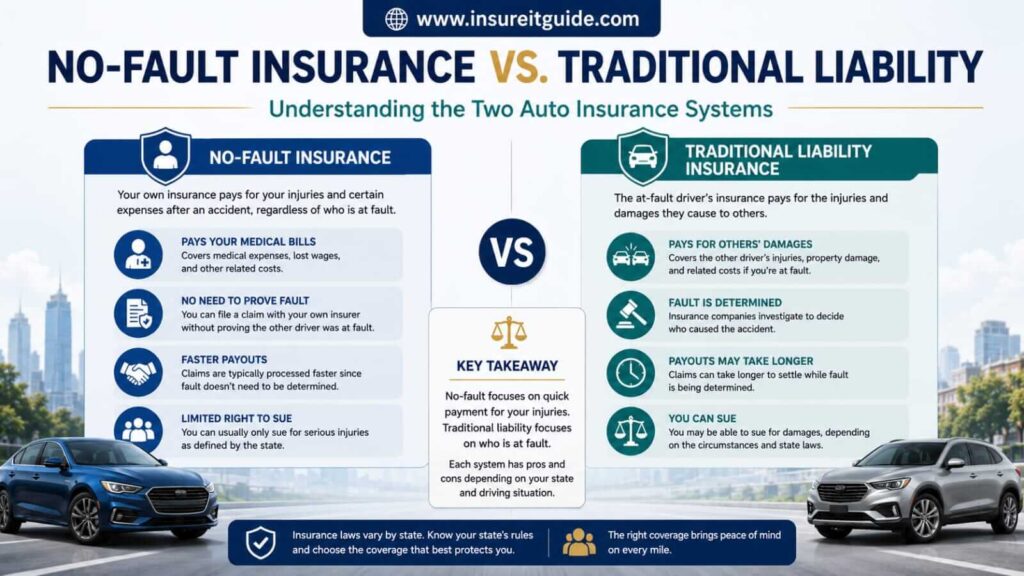
No-fault insurance systems work differently from traditional fault-based systems.
In no-fault states, drivers usually file injury claims with their own insurance company regardless of who caused the accident.
Common No-Fault States
- Florida
- Michigan
- New York
- New Jersey
- Hawaii
- Kentucky
- Minnesota
- Pennsylvania
Advantages of No-Fault Systems
Faster Claims Processing
Medical expenses are often paid more quickly.
Reduced Lawsuits
Smaller injury claims may avoid lengthy lawsuits.
Immediate Medical Access
Drivers can receive medical benefits faster through PIP coverage.
Disadvantages of No-Fault Systems
Higher Insurance Costs
No-fault systems often lead to higher premiums.
Complex Insurance Rules
Coverage structures can become difficult for consumers to understand.
Limited Lawsuit Rights
Drivers may face restrictions when suing after accidents.
No-fault systems remain controversial because they balance faster claims against higher insurance costs.
States With the Lowest Insurance Requirements
Some states still maintain relatively low minimum liability requirements.
Examples include:
- California
- New Jersey
- Pennsylvania
- Massachusetts
Although lower limits may reduce premiums, they may not provide enough financial protection after serious accidents.
Modern accident costs continue to be the following because of the following:
- Expensive vehicle technology
- Higher labor costs
- Rising healthcare expenses
- Supply chain costs
- More advanced repair systems
A single accident involving newer vehicles can easily exceed minimum policy limits.
That is why many financial professionals recommend carrying higher liability protection even when lower coverage is legally acceptable.
What Happens If You Drive Without Insurance?
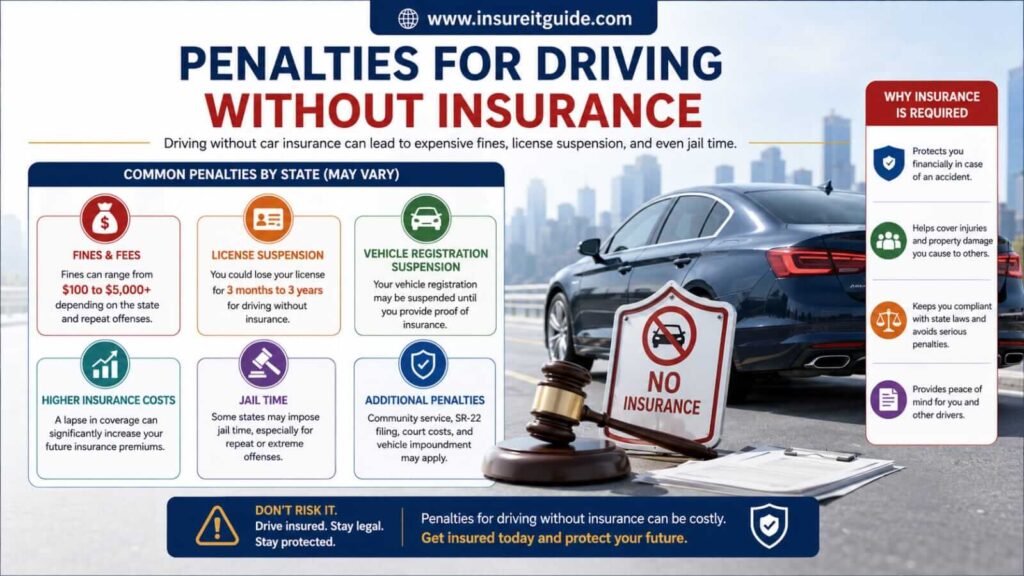
Driving without insurance can create serious legal and financial consequences.
Many states now use electronic verification systems that automatically identify uninsured vehicles.
Common Penalties
Fines
Many states impose heavy fines for uninsured driving.
License Suspension
Your driver’s license may be suspended.
Vehicle Registration Suspension
States may suspend vehicle registration privileges.
SR-22 Filing Requirements
High-risk drivers may need SR-22 filings.
Vehicle Impoundment
Law enforcement may impound uninsured vehicles.
Higher Future Insurance Costs
Insurance companies often charge significantly higher premiums after coverage lapses.
The Financial Risk Is Even Bigger
The legal penalties are serious, but the financial risk can be much worse.
Imagine causing a major accident without insurance.
You could become personally responsible for:
- Medical bills
- Vehicle repairs
- Legal judgments
- Lost wages
- Property damage
These expenses can easily reach tens or even hundreds of thousands of dollars.
Is State Minimum Coverage Enough?
Technically, minimum coverage satisfies legal requirements.
Financially, however, it may not provide enough protection.
Why Minimum Coverage Often Falls Short
Medical Costs Are Expensive
Hospital treatment and rehabilitation costs can quickly exceed low liability limits.
Vehicle Repairs Cost More Today
Modern vehicles contain advanced electronics and expensive safety systems.
Repair costs continue increasing.
Lawsuits Can Become Expensive
If damages exceed your policy limits, you may personally owe the remaining amount.
Who Should Consider Higher Coverage?
You may benefit from stronger coverage if you:
- Own a home
- Have savings or investments
- Drive frequently
- Commute long distances
- Own a newer vehicle
- Live in high-traffic areas
Many experts recommend liability limits significantly above state minimums.
Full Coverage vs Minimum Coverage
Many drivers confuse minimum coverage with full coverage insurance.
These are not the same thing.
Minimum Coverage
Usually includes:
- Liability insurance
May include:
- PIP
- Uninsured motorist coverage
Full Coverage
Typically includes:
- Liability insurance
- Collision coverage
- Comprehensive coverage
When Full Coverage Makes Sense
Full coverage may be beneficial if:
- Your car is newer.
- Your vehicle is financed or leased.
- Your vehicle has high value.
- You rely heavily on your car.
Although full coverage costs more, it may save drivers from major financial losses.
How Much Car Insurance What Do You Really Need?
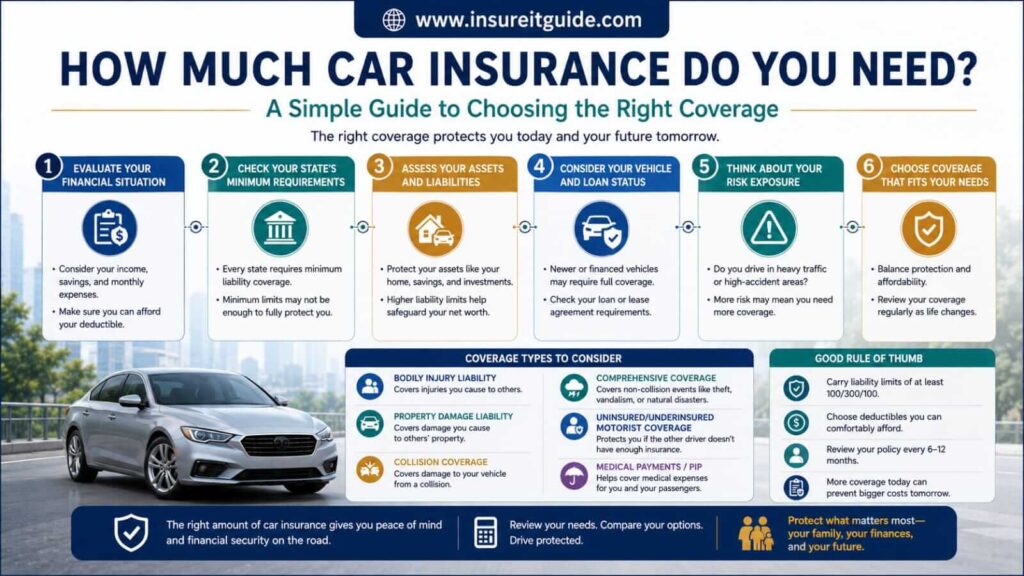
The right coverage depends on several personal factors.
Your Budget
Drivers with tighter budgets often prioritize affordability.
However, extremely low coverage can create larger long-term financial risks.
Vehicle Value
Older vehicles may not need extensive collision coverage.
Newer vehicles often benefit from stronger protection.
Driving Habits
Drivers who commute daily face more accident exposure.
State Laws
Certain states require additional mandatory protections.
Financial Situation
Drivers with significant assets often choose higher liability limits to reduce lawsuit exposure.
A Balanced Insurance Strategy
Many drivers choose:
- Higher liability limits
- Moderate deductibles
- Basic comprehensive coverage
- Uninsured motorist protection
This often provides strong protection without dramatically increasing premiums.
Ways to Save Money on Car Insurance
Car insurance can become expensive, especially for younger drivers and families.
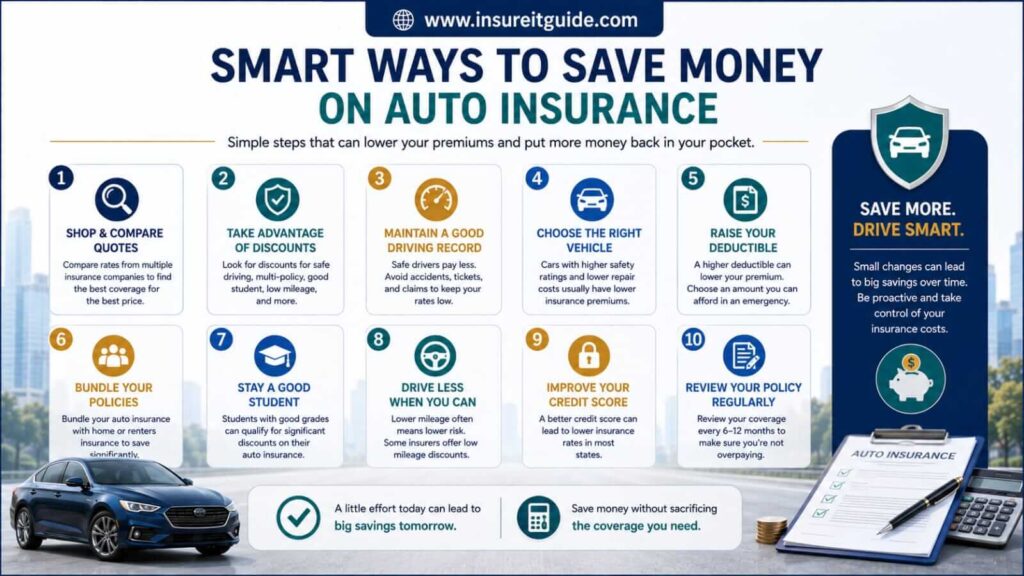
Fortunately, there are several effective ways to reduce premiums.
Compare Multiple Quotes
Insurance rates vary significantly between companies.
Comparing quotes can often save hundreds of dollars annually.
Increase Deductibles.
Higher deductibles usually reduce monthly premiums.
However, drivers should ensure they can afford the deductible after accidents.
Bundle insurance policies.
Many insurers offer discounts for bundling:
- Auto insurance
- Home insurance
- Renters’ insurance
Maintain a Clean Driving Record
Safe drivers often receive lower insurance rates.
Avoiding accidents and traffic violations can significantly reduce premiums.
Ask About Discounts
Potential discounts include the following:
- Good student discounts
- Military discounts
- Multi-car discounts
- Defensive driving discounts
- Low-mileage discounts
Improve Credit Score
In many states, insurers use credit-based insurance scores.
Improving credit may help lower insurance costs.
Common Insurance Mistakes Drivers Make
Many drivers accidentally make expensive insurance mistakes.
Choosing Coverage Based Only on Price
The cheapest policy may provide very limited protection.
Letting Coverage Lapse
Coverage gaps can increase future insurance costs dramatically.
Ignoring Deductibles
Some drivers choose deductibles they cannot realistically afford.
Skipping Uninsured Motorist Coverage
Millions of drivers remain uninsured.
This coverage can provide important protection.
Not Updating Policies
Drivers should update policies after:
- Moving states
- Buying new vehicles
- Marriage
- Major life changes
Reviewing insurance annually can help ensure coverage still matches your needs.
Frequently Asked Questions
What is the minimum car insurance required in my state?
Each state sets its own minimum insurance requirements. Most states require liability insurance covering bodily injury and property damage.
How much liability insurance is legally required for drivers in the USA?
There is no nationwide requirement. Liability limits vary by state.
Which states require the lowest minimum car insurance coverage?
States such as California and New Jersey traditionally maintain lower liability requirements compared to many others.
What happens if you drive without minimum insurance coverage?
Drivers may face fines, license suspension, vehicle impoundment, SR-22 filings, and increased future insurance costs.
Is state minimum car insurance enough after an accident?
Often, no. Serious accidents can exceed minimum liability limits quickly.
Does full coverage include liability insurance?
Yes, full coverage generally includes liability, collision, and comprehensive protection.
Why do insurance requirements vary by state?
States regulate insurance independently based on local accident trends, medical costs, weather risks, and legal systems.
Is car insurance mandatory in every state?
Almost every state requires insurance or proof of financial responsibility.
Key Takeaways
- Minimum car insurance requirements vary by state.
- Most states require liability insurance.
- No-fault states often require PIP coverage.
- Minimum coverage may not fully protect drivers financially.
- Driving without insurance can lead to severe penalties.
- Higher liability limits often provide stronger protection.
- Full coverage provides broader financial protection than minimum coverage.
- Comparing quotes can help drivers reduce insurance costs.
Final Thoughts
Understanding the minimum car insurance requirements by state is one of the most important parts of becoming a financially responsible driver in the United States.
While minimum liability coverage may satisfy legal requirements, it may not provide enough protection after serious accidents. Medical expenses, lawsuits, and vehicle repair costs can quickly exceed minimum policy limits.
That is why drivers should carefully evaluate not only what their state requires, but also what level of protection makes sense for their personal financial situation.
Whether you are a first-time driver, a family trying to reduce insurance costs, or someone relocating to another state, taking time to understand insurance laws can help you make smarter decisions and avoid expensive mistakes.
Before purchasing a policy, compare multiple quotes, review your state requirements carefully, and consider whether higher liability limits may better protect your financial future.
For more beginner-friendly insurance guides, practical coverage comparisons, and money-saving insurance tips, visit www.insureitguide.com.
